

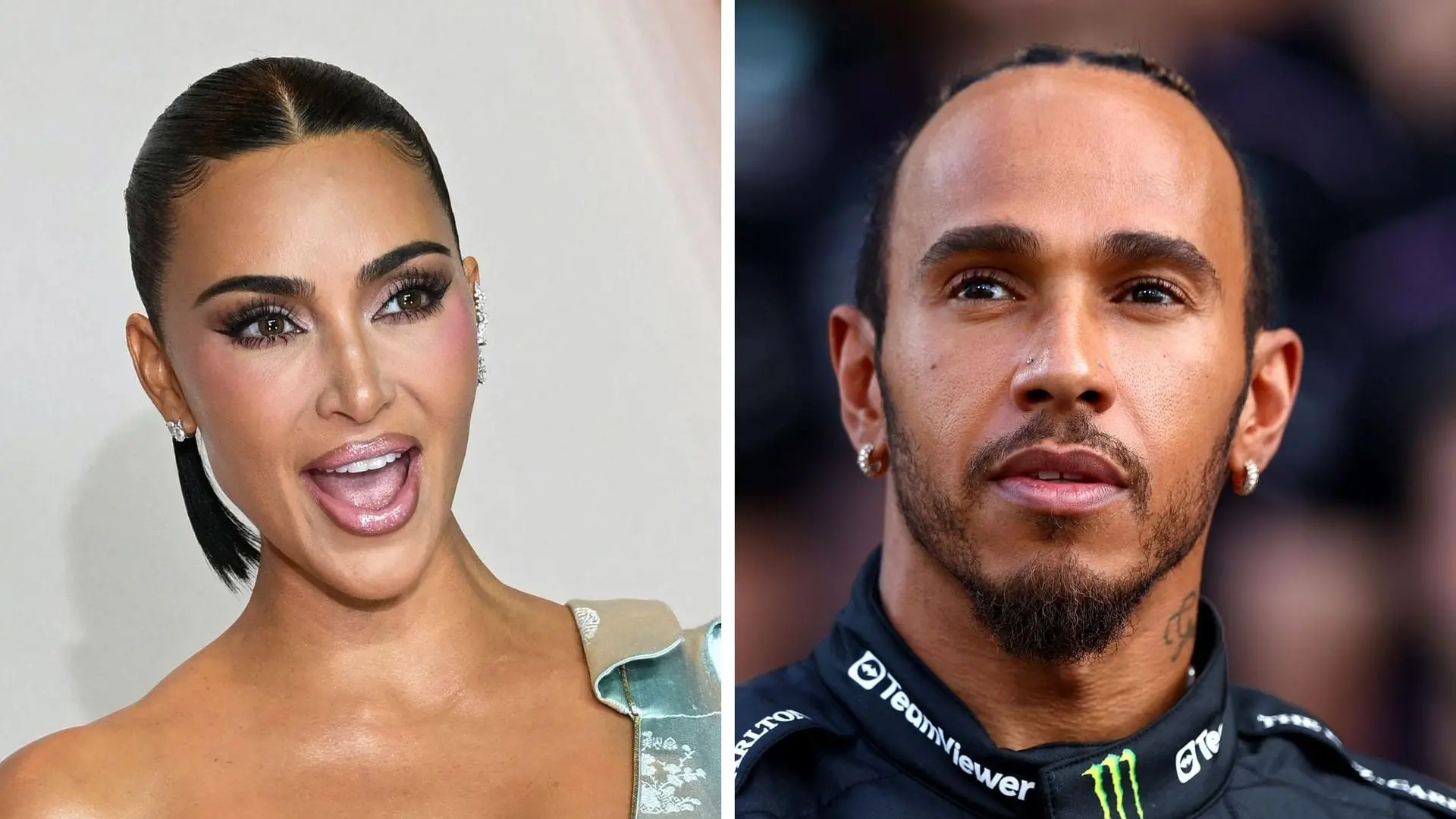
Kim Kardashian and Lewis Hamilton's whirlwind romance has made headlines not just for its star power but also for its staggering environmental cost. Since the beginning of their relationship in early 2025, the reality television icon and Formula 1 champion have been crisscrossing the globe in Kardashian's private jet—an aircraft reportedly valued at around 115 million euros. According to an analysis by The Sun, the couple's combined air travel has generated carbon dioxide emissions equivalent to 84 times what the average person in the United Kingdom produces from flying in a single year. That baseline is just 4.5 tons of CO2 per person annually.
The carbon footprint of their romance is so large that it has reignited debates about the role of celebrities and ultra-wealthy individuals in fueling climate change. While many people are making conscious efforts to reduce their environmental impact, the flight patterns of the rich and famous often tell a different story—one in which luxury and convenience override ecological concerns.
The Scale of the Emissions
To put the couple's emissions into perspective, consider that the global average carbon footprint from all activities is about 4.8 tons per person per year. In the UK, the average person's total carbon footprint is around 5.5 tons, with flights accounting for a small fraction. But for Kim Kardashian and Lewis Hamilton, a single day of dating can produce more CO2 than a typical family does in an entire year.
One particularly egregious example occurred in the past month when Kardashian flew from Los Angeles to the United Kingdom specifically to pick up Hamilton and then fly back with him to the United States. Aviation expert Jack Sweeney calculated that this 24-hour trip alone released approximately 100 tons of CO2 into the atmosphere. For context, 100 tons of CO2 is equivalent to the annual emissions of about 20 average British citizens. It also equals the emissions from driving a gasoline-powered car for roughly 250,000 miles—more than the distance from Earth to the Moon.
The couple's earlier flights are equally damaging. Their very first date in the relationship produced 50 tons of CO2, and a subsequent rendezvous in Paris added another 4 tons. When all the journeys are tallied, the total surpasses 500 tons of CO2, which is comparable to the lifetime emissions of dozens of people or the yearly energy use of dozens of homes.
The Ironic Twist: Hamilton's Avowed Environmentalism
What makes the situation particularly ironic is Lewis Hamilton's public commitment to environmental causes. In 2019, the seven-time Formula 1 world champion sold his private jet, citing his desire to reduce his personal carbon footprint. According to his friend and former F1 driver David Coulthard, who spoke on the Up To Speed podcast, Hamilton decided to get rid of the aircraft “in the interest of the planet.” Coulthard added: “That doesn't mean he doesn't fly private anymore—he just doesn't have the guilt of owning one. I'm not sure that's climate compensation.”
Indeed, while Hamilton no longer owns a jet, he continues to use private aviation—often aboard the planes of friends or partners, as seen with Kardashian. This behavior highlights a broader issue within environmental activism: the gap between rhetoric and personal action. Hamilton has been a vocal advocate for sustainability in Formula 1, pushing the sport to adopt carbon-neutral fuels and reduce its overall emissions. He has also invested in plant-based meat alternatives and launched a fashion line with sustainability claims. Yet his travel patterns tell a different story.
Kim Kardashian's Jet Set Lifestyle
Kim Kardashian is no stranger to controversy over private jets. As one of the most famous women in the world, she has amassed a personal fortune estimated at $1.7 billion, largely from her SKIMS shapewear line and various endorsement deals. Her private jet—a Gulfstream G650 or similar model—is a symbol of that wealth. But it also comes with a significant carbon burden. A Gulfstream G650 burns roughly 400 gallons of jet fuel per hour, emitting about 4 tons of CO2 per flight hour. Given that Kardashian and Hamilton have been flying across oceans and continents, the cumulative effect is staggering.
Kardashian herself has occasionally acknowledged her carbon footprint, but like many celebrities, she continues to fly private for security, convenience, and privacy reasons. The security argument is perhaps the most valid—high-profile figures face genuine threats that make commercial air travel risky. But environmental critics argue that the solution is not simply to emit massive amounts of CO2, but rather to invest in carbon offsets or sustainable aviation fuels, or to limit travel frequency.
The Broader Problem of Celebrity Private Jets
Kim and Lewis are far from alone. In recent years, the private aviation habits of celebrities like Taylor Swift, Drake, and Kylie Jenner have been publicly scrutinized. In 2023, one study found that private jet emissions in the U.S. increased by 23% in a single year, and that the top 1% of frequent flyers account for a huge share of aviation's carbon footprint. These flights release more CO2 per passenger than any form of commercial travel because they carry few people but burn the same amount of fuel per mile as commercial jets.
The issue gains urgency as the world faces the escalating impacts of climate change—more intense heatwaves, wildfires, hurricanes, and floods. According to the Intergovernmental Panel on Climate Change (IPCC), the aviation sector accounts for about 2.4% of global CO2 emissions, but private jets, with their disproportionate emissions per traveler, are a high-profile symbol of inequality and environmental disregard.
Hamilton's Record on Sustainability
Despite his jet set romance, Lewis Hamilton has done more than many athletes to promote environmental causes. He has driven fully electric vehicles on the street, invested in vegan startups, and urged the FIA to make Formula 1 carbon neutral by 2030. He also founded the Hamilton Commission to increase diversity in motorsport and STEM fields. However, his celebrity dating life is now undercutting that image.
The criticism of his relationship with Kardashian is not just about the CO2 numbers; it's about the perception of hypocrisy. Fans who admired Hamilton for standing up against racism and for the planet are now questioning whether he actually lives by the values he preaches. The situation is reminiscent of other celebrities who have faced backlash for preaching sustainability while flying private.
What Can Be Done?
The options for reducing the carbon impact of celebrity romance are limited unless systemic changes occur. Some private jet operators now offer sustainable aviation fuel (SAF), which can cut lifecycle emissions by up to 80%. However, SAF is expensive and not widely available. Another possibility is carbon offsetting, but critics argue that offsets often do not deliver real, additional emission reductions. Travel less frequently, choose direct flights (which are more efficient), or combine trips can help, but such measures are rarely taken by the ultra-wealthy.
For now, the relationship between Kim Kardashian and Lewis Hamilton remains a poster child for the climate impact of celebrity lifestyle. The 100-ton date, the 84x multiplier, and the broken promise of a green lifestyle make for a powerful reminder that even the most well-intentioned individuals can be carbon hypocrites when love—and luxury—are on the line.
As the world watches, the couple will have to decide whether they will respond to criticism with change or continue their high-flying romance. Either way, the planet will feel the consequences.
Source: Promiflash.de News