

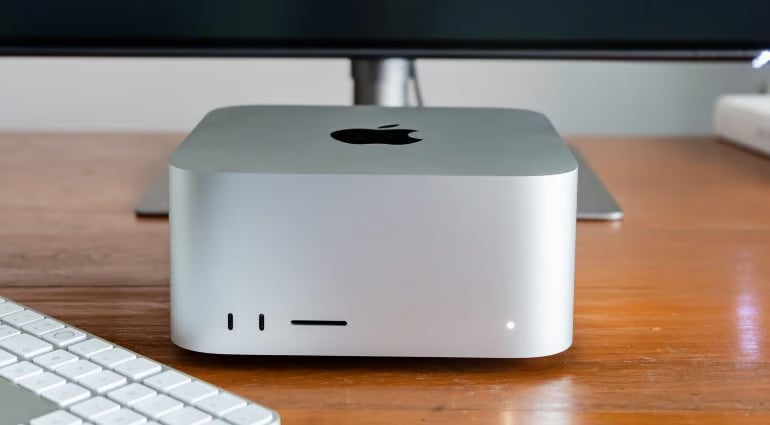
Apple Scales Back RAM Options on Desktop Macs
Apple's desktop Mac lineup is facing unprecedented pressure as surging demand for AI-capable machines collides with a global memory shortage. This week, the company quietly removed several high-memory configurations from the Mac Studio and Mac mini on its online store, leaving buyers with fewer upgrade paths and, in many cases, higher starting prices.
The biggest change affects the M3 Ultra Mac Studio. Previously available with up to 256GB of unified memory, the machine is now capped at 96GB. The M4 Max Mac Studio has also lost its 128GB option. Meanwhile, the M4 Pro Mac mini no longer offers 64GB of RAM; buyers can now choose only between 24GB and 48GB. The standard M4 Mac mini also saw its 32GB variant removed, leaving just 16GB and 24GB options.
Why Apple Is Cutting Memory Configurations
The decision is driven by two interrelated factors: the rapid growth of AI workloads on personal computers and a tightening global supply of high-bandwidth memory chips. Apple's unified memory architecture, which allows the CPU, GPU, and Neural Engine to share a single pool of memory, has become highly popular among developers running local AI models and agentic AI software. This demand has spiked especially for configurations with larger memory capacities.
At the same time, memory manufacturers have been prioritizing production for AI servers, which require massive amounts of high-bandwidth memory (HBM). This shift has caused shortages for consumer-grade DRAM and has driven up prices. Industry analysts have noted that the global DRAM market is expected to remain constrained through at least the first half of 2027, affecting everything from smartphones to desktop computers.
Delays and Delivery Estimates Worsen
Even with fewer configurations available, wait times for Mac Studio and Mac mini models have grown substantially. Reports indicate that some Mac Studio configurations now show delivery estimates of 9 to 10 weeks, while certain Mac mini builds may take 10 to 12 weeks to arrive. The delays are not limited to desktops: higher-memory versions of Apple's MacBook lineup are also experiencing longer shipping times.
Apple CEO Tim Cook acknowledged the supply challenges during the company's recent earnings call. "We think, looking forward, that the Mac mini and Mac Studio may take several months to reach supply-demand balance," Cook said. He also revealed that Apple had underestimated demand from users seeking machines capable of running AI tools locally, and that rising memory prices would continue to impact the company in the coming months.
A Growing Trend: Scaling Back Options
This is not the first time Apple has reduced configuration options due to supply constraints. In March, the company removed the 512GB memory configuration for the Mac Studio. Earlier this year, Apple also discontinued the 256GB storage version of the Mac mini, effectively raising the starting price from $599 to $799. These moves reflect a broader strategy of streamlining production amid component shortages while maintaining profitability.
The memory squeeze is part of a wider industry trend. Other PC manufacturers have also faced difficulties securing enough DRAM and NAND flash for high-end workstations and AI-ready laptops. However, Apple's reliance on unified memory—where RAM is soldered onto the main logic board and cannot be upgraded later—makes configuration decisions at purchase time particularly critical for consumers.
How This Affects Buyers
For professionals who rely on high-memory Macs for tasks like video editing, 3D rendering, or running large language models locally, the loss of 128GB and 256GB options represents a significant limitation. AI developers in particular may find the new 96GB cap on the M3 Ultra Mac Studio restrictive for training models with billions of parameters. Some users may need to consider cloud-based alternatives or wait for future hardware revisions that support larger memory capacities.
The smaller Mac mini, often used as a compact workstation or home server, also sees reduced flexibility. Creative professionals who previously upgraded to 64GB now have to settle for 48GB, which may impact multitasking performance with memory-intensive applications. Casual buyers opting for the standard Mac mini may find 16GB sufficient for daily use, but power users will miss the 32GB option.
Historical Context: Apple's Supply Chain Challenges
Apple has faced supply chain disruptions before, notably during the global chip shortage that began in 2020. The company has generally managed better than most rivals due to its long-term contracts and vertical integration, but memory shortages have proven more stubborn. Unlike processors, which Apple largely designs in-house, memory chips come from external suppliers like Samsung, SK Hynix, and Micron. These manufacturers have limited flexibility to rapidly increase production of both HBM for AI servers and high-density DRAM for consumer devices.
In the past, Apple has dealt with similar constraints by delaying product launches or reducing spec options. The removal of the 256GB storage tier on the Mac mini echoes a similar move in 2023 when Apple dropped the 128GB storage option on entry-level MacBook Air models. Such adjustments are often temporary but can last months or even years depending on market conditions.
What Apple Could Do Next
Industry observers speculate that Apple may eventually introduce new memory technologies to alleviate the bottleneck. For instance, Apple could adopt LPDDR6 or other next-generation memory standards that offer higher bandwidth and density. However, such changes require significant engineering work and coordination with memory partners.
Alternatively, Apple might expand its use of memory compression techniques or optimize macOS to work more efficiently with smaller RAM pools. The company has a history of improving software performance to reduce hardware requirements, as seen with the transition from Intel to Apple Silicon. Still, for tasks like running large AI models locally, there is no substitute for physical memory capacity.
Another possibility is that Apple will accelerate the release of next-generation Macs with native support for larger memory configurations. Rumors suggest that the M5 chip family could feature improved memory controllers and support for up to 512GB of unified memory. But given the current supply constraints, it may take until 2027 or later for such capabilities to become widely available.
Impact on the Mac Ecosystem
The limited availability of high-memory Macs could have ripple effects across Apple's ecosystem. Developers who rely on local AI inference may shift to cloud platforms like AWS or Azure, reducing the appeal of Apple's hardware for AI workloads. This could slow adoption of Apple's AI frameworks, such as Core ML and Create ML, among third-party developers.
Meanwhile, creative professionals who depend on high-memory configurations for video production, music composition, or scientific computing may consider switching to competing platforms like Windows-based workstations from Dell or Lenovo, which often offer more flexible memory options. However, Apple's integrated ecosystem and performance per watt advantages remain strong selling points.
For now, buyers looking to purchase a Mac Studio or Mac mini should plan ahead and place orders early, as wait times are expected to remain long. Checking Apple's refurbished store might yield older configurations with larger memory, though supply there is also limited. Third-party resellers may have stock of discontinued configurations, but prices could be inflated.
The Bigger Picture: AI and Hardware Convergence
The memory crunch underscores a fundamental shift in computing: the convergence of AI and personal computers. Whereas historically large language models and other AI workloads were run on cloud servers, there is growing demand for local execution, driven by privacy concerns, latency requirements, and the desire to reduce cloud costs. Apple's unified memory architecture is uniquely suited for this trend, but it also exposes the company to memory supply volatility.
Other companies, such as Nvidia with its Digits personal AI supercomputers and various PC makers with Meteor Lake-based laptops, are also vying for the same memory chips. As AI becomes embedded in everyday computing, the competition for high-bandwidth memory will only intensify. Apple's decision to trim RAM options today is a sign of deeper industry dynamics that may reshape hardware design for years to come.
In the immediate term, Mac Studio and Mac mini buyers will have to adapt to fewer choices and longer waits. The memory situation is unlikely to resolve quickly, and Apple may need to further adjust its lineup. For now, users should carefully evaluate their memory needs and consider whether current configurations—capped at 96GB for the Mac Studio and 48GB for the Mac mini—are sufficient for their workflows. If not, waiting for future hardware or exploring cloud-based alternatives may be the only options.
Source: TechRepublic News