

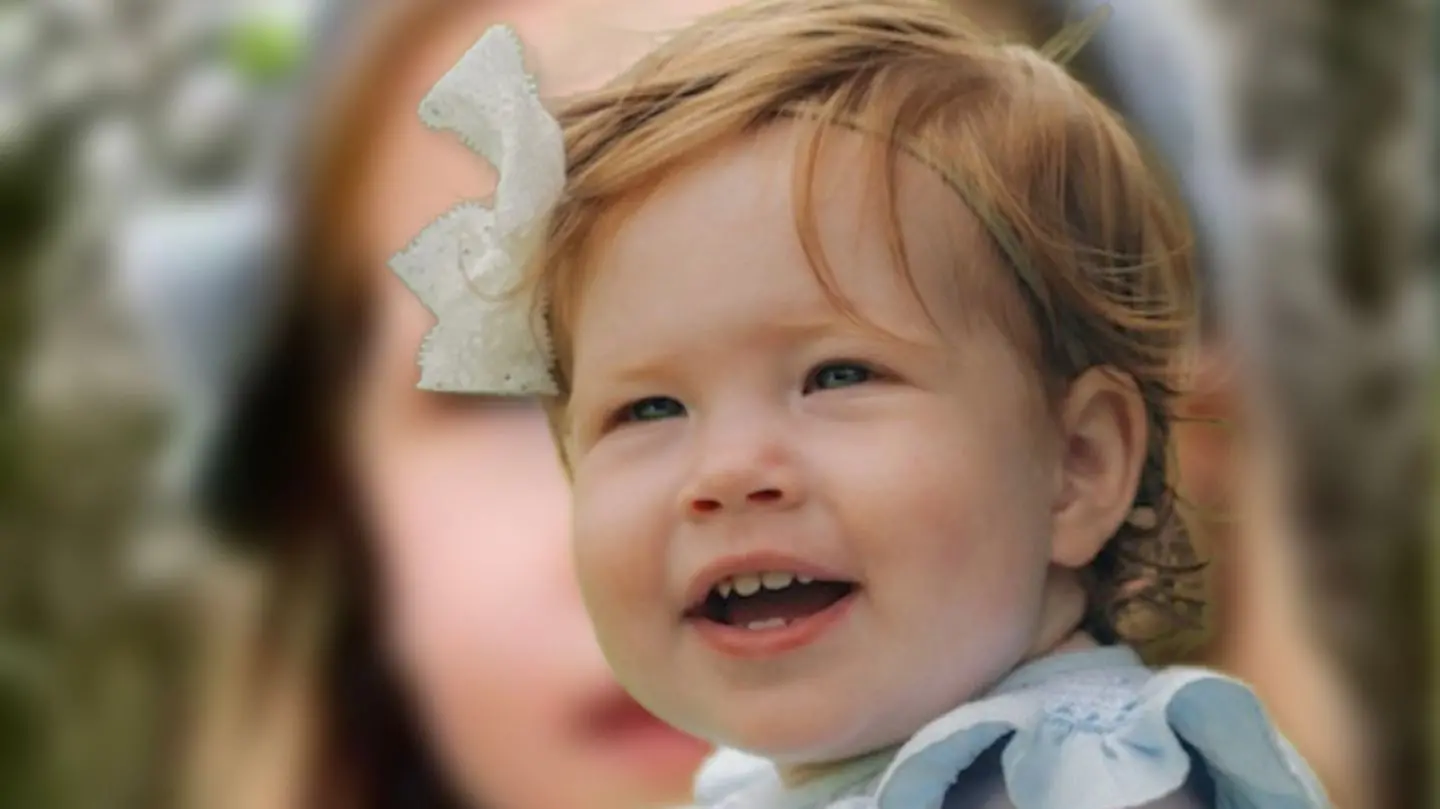
AI Prediction of Princess Lilibet's Teenage Appearance
Royal enthusiasts have turned to artificial intelligence to envision how Princess Lilibet, the daughter of Prince Harry and Meghan Markle, might look as a teenager. The interest spiked after the Duke and Duchess of Sussex did not release a new official portrait for Lilibet's fourth birthday on June 4, 2025. Using existing photos of the young princess, AI tools generated images depicting her at approximately ten years old — the same age as her cousin, Princess Charlotte of Wales, who turns twelve in 2026. The resulting images, shared widely on social media, suggest Lilibet could inherit features from both her parents, with hints of resemblance to her cousin Charlotte, yet maintaining her own distinct look.
The Birthday Photo Tradition and Its Absence
Since stepping back from royal duties in 2020, Prince Harry and Meghan have adopted a more private approach to sharing their children's lives. Unlike the British royal family, which traditionally releases official birthday portraits for its youngest members, the Sussexes have sporadically shared images of their son Archie and daughter Lilibet. In 2025, fans hoped for a new picture of Lilibet, but none was provided. This absence has fueled speculation and, in some cases, curiosity-driven AI experiments. The couple's decision to withhold photographs is consistent with their desire to protect their children's privacy and shield them from intense media scrutiny.
Background on Princess Lilibet Diana Mountbatten-Windsor
Born on June 4, 2021, at Santa Barbara Cottage Hospital in California, Lilibet is the second child of Prince Harry and Meghan. She was named in honor of her great-grandmother, Queen Elizabeth II, whose family nickname was Lilibet, and her grandmother, the late Princess Diana. Lilibet holds dual citizenship and is eighth in line to the British throne. Despite her royal lineage, she has grown up in a relatively private environment in Montecito, away from the formal expectations of the monarchy. Her older brother, Archie Harrison Mountbatten-Windsor, was born in May 2019. The children are not styled as prince or princess in their daily lives, though they legally hold those titles following the death of Queen Elizabeth II.
The Royal Cousins Comparison
Princess Charlotte, the second child of Prince William and Catherine, Princess of Wales, is often compared to Lilibet due to their age proximity. Born on May 2, 2015, Charlotte is the only daughter of the future King William V. She has been a prominent figure in royal public appearances, from Trooping the Colour to school events. AI-generated images of Lilibet at age ten show similarities in facial structure and expression to Charlotte at the same age. However, experts note that Lilibet's features also mirror her mother's: Meghan's warm eyes and smile can be seen in the AI renderings. The comparison highlights the genetic blend of the Spencer, Windsor, and Markle families.
The Use of Artificial Intelligence in Celebrity and Royal Image Generation
Artificial intelligence has increasingly been used to predict the aging of public figures. Tools like Midjourney, DALL-E, and FaceApp allow users to upload images and generate realistic age-progressed versions. For royals who maintain a low public profile, these tools offer a glimpse into what their children might look like as they grow. However, the accuracy of AI-generated images depends on the quality and variety of input photos. In Lilibet's case, only a handful of official photos exist — most from birthday announcements or rare family snapshots shared by Harry and Meghan. The AI must extrapolate based on limited data, leading to variations in the results. Critics caution against placing too much trust in such images, as they can be influenced by algorithmic biases and may not reflect actual development.
Privacy and Public Fascination with Royal Children
The Sussexes' approach to privacy starkly contrasts with the traditional royal playbook. William and Catherine have frequently shared official portraits of their three children, while Harry and Meghan have chosen to release images sparingly. This strategy has both supporters and detractors. Some applaud the couple for prioritizing their children's well-being over public curiosity. Others argue that by stepping into the public eye through lucrative media deals, the couple invites scrutiny. The AI images of Lilibet represent a new dimension of intrusion where digital tools fill the gaps left by the absence of official content. The ethical implications are significant: is it acceptable for fans to create and distribute AI-generated images of a minor without parental consent? This question remains unresolved.
Royal Protocol and the Title Debate
Lilibet's formal title is Princess Lilibet Diana Mountbatten-Windsor, a designation she automatically received upon Queen Elizabeth II's death in September 2022. Her brother Archie also became a prince at that time. However, the couple has not used these titles publicly in the United States. In interviews, Harry and Meghan have indicated that their children will decide for themselves how they wish to be addressed when they are older. The title issue has been a point of contention between the Sussexes and the rest of the royal family, with some insiders suggesting that the couple rejected the idea of styling their children as prince and princess to avoid the associated scrutiny. Yet, legally, the children's status is clear. The AI images often caption Lilibet as "Princess," reflecting her official standing.
Cultural Impact of AI-Generated Royal Images
The trend of creating AI images of royals has expanded beyond Lilibet. Fans have generated portraits of Prince George as a teenager, Princess Charlotte in her twenties, and even imagined what Queen Elizabeth II might look like if she were still alive. This phenomenon blends fandom with technological curiosity. For the royal family, these images present a new challenge: controlling their image in an age of synthetic media. While the official photographs are carefully curated, AI-generated versions can be easily manipulated and spread. The images of Lilibet at age ten have gained traction on platforms like Twitter and Reddit, sparking discussions about heredity and resemblance. They also serve as a form of engagement for royal-watchers who feel starved of official content from the Sussex household.
Harry and Meghan's Media Strategy Post-Royal Life
Since relocating to California, Prince Harry and Meghan have signed lucrative deals with Netflix and Spotify (the latter ended in 2023), published books, and launched charitable initiatives. Their media strategy involves selective sharing of personal moments, often to promote specific projects. For example, a rare photo of Lilibet was included in the Netflix series "Harry & Meghan" in 2022. Another appeared in a Christmas card in 2023. The couple has not given a single extensive interview about their children's daily lives. This controlled release ensures that Harry and Meghan retain narrative control, but it also leaves room for speculation. The AI images are a direct result of this information vacuum. The couple has not commented on the AI-generated pictures, continuing their policy of silence on unofficial representations.
Scientific Perspective on Age Progression Technology
Forensic anthropologists and facial recognition experts often use age progression for missing persons cases, relying on biological markers of facial development. Consumer AI tools operate differently: they use neural networks trained on thousands of images to predict how features change over time. For young children, the accuracy is lower because facial structure transforms dramatically during childhood and adolescence. Lilibet, being only four, has a still-developing face. The AI predictions are thus best viewed as speculative illustrations rather than definitive forecasts. Nonetheless, they provide a compelling visual narrative for the public. The images show a girl with light hair, a small nose, and a lively expression — characteristics that align with both parents. The technology continues to improve, and future iterations may produce even more lifelike renderings.
The Social Media Response
Reactions to the AI images of Lilibet have been mixed. Many users express delight at seeing what she might look like, with comments like "She's so cute!" and "She looks just like Meghan." Others criticize the exercise as invasive. "Let the child grow up in peace," one Twitter user wrote. Comparisons between Lilibet and Charlotte inevitably arise, with some fans pointing out shared Windsor traits. The images have also renewed debate about the royal rift: Harry and William's daughters will likely grow up with very different public lives. Charlotte has been photographed by the press since birth, while Lilibet's face is known to only a small circle. The AI images attempt to bridge that gap, but they also highlight the asymmetry in transparency between the two branches of the family.
In addition, the images have been shared by several entertainment news outlets, including Vanidades, which was cited in the original article. The viral nature of the images underscores the global appetite for royal content. Even after stepping away, Harry and Meghan remain objects of intense interest. The AI generation becomes a participatory activity for fans, allowing them to co-create the narrative that the couple has tried to control.
Future Implications for Royal Privacy
As AI technology evolves, the boundary between public figures' private lives and public curiosity may blur further. For the British royal family, which has navigated centuries of media evolution, AI-generated content presents a new frontier. The palace has not issued a statement on the Lilibet images, but similar cases involving deepfakes and unauthorized likenesses have prompted legal discussions. In the United States, where the Sussexes reside, laws regarding the use of a person's image vary by state. For minors, there are additional protections. However, AI-generated content often falls into a gray area. The creators of the Lilibet images likely did not seek permission from the family, relying on existing fair use or artistic expression arguments. This situation may lead to calls for tighter regulations, especially concerning children of public figures.
The AI images of Princess Lilibet offer a fascinating case study in the intersection of technology, fame, and family. They satisfy a public longing to see a rarely photographed child grow up, while simultaneously raising ethical questions. For now, the images remain a conversation piece. Whether Harry and Meghan will ever address them directly is uncertain. Their silence continues to speak volumes, allowing the AI-generated future version of their daughter to captivate audiences around the world.
Source: gala.de News