

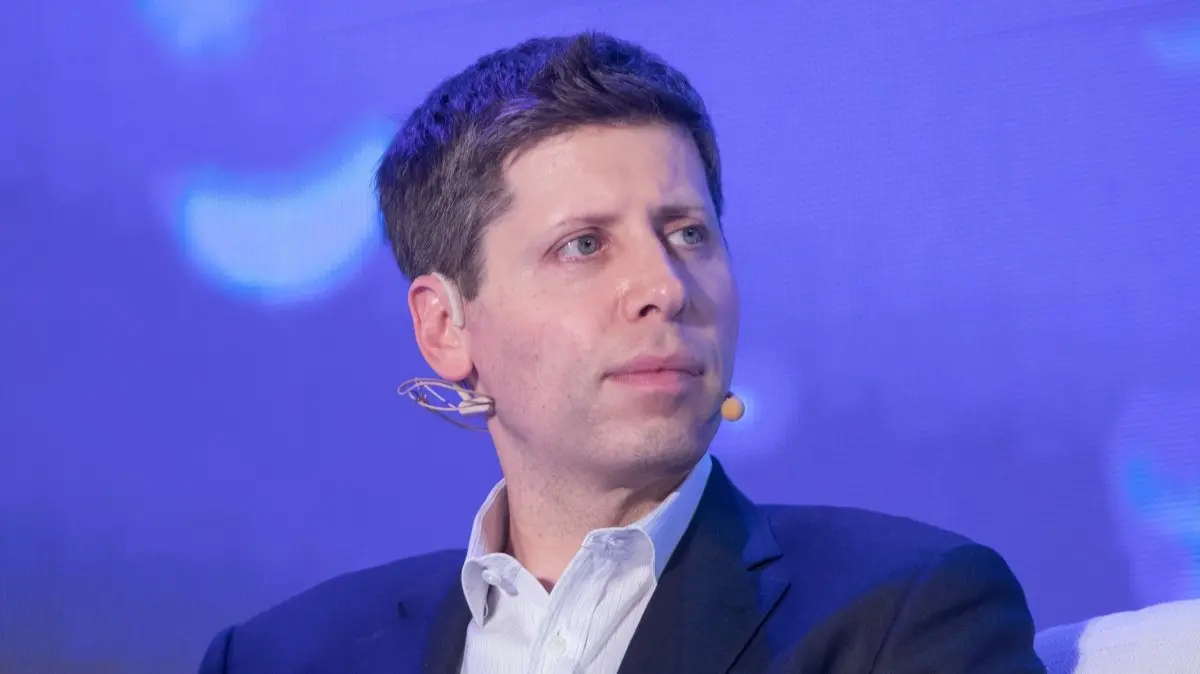
Sam Altman, the CEO of OpenAI, has publicly walked back his long-held warnings about the immediate job-destroying impact of artificial intelligence. Speaking at the 'Accelerate AI' conference hosted by the Commonwealth Bank of Australia, Altman conceded that he had been mistaken about the speed at which AI would eliminate entry-level office jobs. 'I'm glad I was wrong on this,' he said according to Reuters. 'I had thought there would be more impact on reduction of entry-level office jobs by now than there actually has been.' The statement marks a notable shift for a tech leader who has consistently warned about AI-induced unemployment for more than a decade.
Background on Sam Altman's Predictions
Altman has been a vocal proponent of the idea that artificial intelligence will fundamentally reshape the labor market. As early as 2016, he predicted that AI would displace millions of workers, a theme he repeated in interviews and public appearances. In a 2023 interview with The Atlantic, he said, 'Many people in AI pretend that it will only bring good things — that it’s just a complement, that nobody will ever be replaced. Jobs will definitely go away, period.' He also speculated that AI could perform 30 to 40 percent of work tasks 'in the not-too-distant future.' These statements have fueled debates among economists, policymakers, and tech workers about the need for universal basic income and retraining programs.
The Changing Landscape of AI and Jobs
Altman's recent retraction highlights a complex reality: while AI is advancing rapidly, its displacement of white-collar and entry-level jobs has been slower than some anticipated. The rise of generative AI tools like ChatGPT has impacted creative and knowledge work, but many routine office tasks remain resistant to full automation. A study from the Mercer consulting firm found that nearly all CEOs worldwide intend to cut jobs due to AI within the next two years, but it remains unclear whether AI is the actual driver or merely a convenient excuse for cost-cutting.
Meanwhile, the tech industry is grappling with its own contradictions. Companies like Microsoft, Google, and Meta have laid off thousands of workers in recent years, often citing a shift toward AI priorities. Yet the same companies are aggressively hiring AI talent, leading to a net redistribution of roles rather than outright elimination. Altman's own firm, OpenAI, has increased its headcount significantly since the launch of ChatGPT, though it is also developing systems capable of automating software development.
The Broader Economic Debate
Economists are divided on the net effect of AI on employment. Some argue that AI will create new job categories, just as previous technological revolutions did. Others warn of structural unemployment, particularly for roles involving routine cognitive tasks. The McKinsey Global Institute estimates that up to 30% of work activities could be automated by 2030, displacing up to 375 million workers globally. Altman's earlier prediction of 30-40% falls within that range, but his recent admission suggests that the timeline may be longer than he expected.
Altman’s revised view also comes amid a broader reassessment of AI hype. Stock markets have cooled on AI pure-plays after initial feverish excitement, and regulators are increasingly scrutinizing the technology’s impact on labor and society. The European Union is finalizing the AI Act, which includes measures to monitor job displacement risks. Altman himself has been an advocate for responsible AI development, testifying before the U.S. Congress and calling for a global regulatory framework.
OpenAI's IPO Plans and New Foundation
A major subplot to Altman's correction is OpenAI's reported plan to file a confidential IPO in the coming weeks, targeting a valuation of $1 trillion. The company has been under pressure to generate revenue and justify its massive valuation, especially as it spends heavily on computing infrastructure and talent. An IPO would also subject Altman to more scrutiny from public investors, who may question his earlier dire forecasts about AI’s impact on the economy.
To address concerns about job displacement, Altman recently announced a new initiative funded by the OpenAI foundation that will provide support to people who lose jobs due to AI. Details remain sparse, but the move is seen as a public relations effort to soften the company's image as a potential job-killer. Critics point out that such a foundation is a drop in the bucket compared to the scale of potential disruption, but it signals that Altman is aware of the social responsibility implications of his technology.
Historical Context: From Luddites to Automation Anxiety
The fear that new technologies will destroy jobs is as old as the Industrial Revolution. The Luddite movement of the early 19th century protested against textile machinery that replaced skilled artisans. Similarly, the introduction of ATMs in the 1970s was expected to decimate bank teller jobs, but instead, tellers moved into customer service roles. However, AI differs because it targets cognitive rather than manual work, raising the possibility that even white-collar professionals may not be immune.
Altman’s journey from alarmist to more measured forecaster may reflect a maturing understanding of how technology diffuses through the economy. His company’s own products are now used by millions for writing, coding, and creative tasks, yet widespread unemployment has not materialized. Economists point out that job displacement is often offset by new roles in AI oversight, data labeling, model training, and ethical auditing.
In conclusion, Altman’s reversal is a significant data point in the ongoing debate about AI and labor. It underscores the difficulty of predicting technological impact and the need for flexible, evidence-based policy. As OpenAI moves toward a blockbuster IPO, its CEO’s evolving views will continue to influence market sentiment and public discourse. The future of work remains uncertain, but leaders like Altman are beginning to acknowledge that the robots — at least so far — have not taken all the jobs.
Source: heise online News