

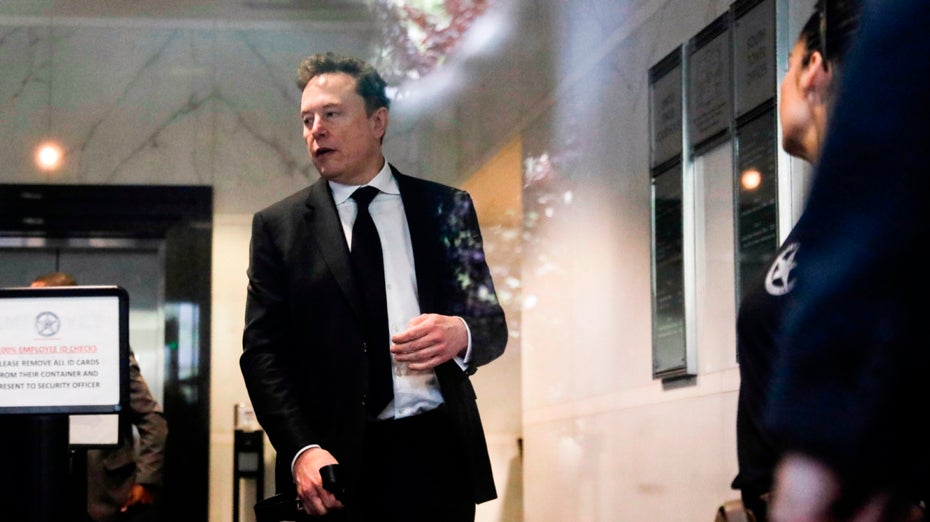
In a California courtroom, one of the most anticipated legal battles in the tech world is unfolding: Elon Musk versus OpenAI. The lawsuit, filed by Musk in early 2025, alleges that OpenAI has abandoned its founding mission as a non-profit organization dedicated to developing artificial intelligence for the benefit of humanity. Instead, Musk claims, the company has become a profit-driven entity beholden to its investors, most notably Microsoft. The trial has already shed light on the immense scale of AI operations and the financial stakes involved.
The Origins of the Conflict
Elon Musk was one of the original co-founders of OpenAI in 2015, alongside Sam Altman, Greg Brockman, and others. Musk contributed significant funding—reportedly over $100 million in total—and helped recruit top talent. The organization's stated goal was to advance digital intelligence in a way that would benefit all of humanity, free from the constraints of profit motives. Musk left the board in 2018, citing potential conflicts with his work at Tesla, which was also developing AI for autonomous driving. However, tensions simmered as OpenAI transitioned to a capped-profit model in 2019 and later accepted billions from Microsoft.
The lawsuit argues that this shift violated the original agreement and that OpenAI's decision to keep key technologies secret, such as the architecture behind GPT-4, contradicts the transparency ethos Musk championed. The trial is expected to last several weeks and could set a precedent for how AI companies balance openness with commercial interests.
Staggering Costs Revealed
One of the most striking revelations from the trial is OpenAI's projected spending on computing power. According to testimony, the company expects to spend approximately $50 billion USD in 2026 alone on cloud computing and specialized hardware to train and run its models. This figure underscores the enormous capital requirements in the AI race, where companies like Google, Anthropic, and Meta are also investing heavily. The cost also highlights why OpenAI needed to pivot to a for-profit structure; sustaining such expenses on donations and grants would be impossible.
During the proceedings, internal documents showed that OpenAI's revenue has grown exponentially, driven by subscriptions to ChatGPT and licensing deals. However, the company still operates at a loss due to these infrastructure costs. Musk's legal team argues that this profit-driven approach forces OpenAI to prioritize shareholder value over safety and public benefit.
What the Trial Means for the Future of AI
Beyond the personal feud between Musk and Altman, the case raises fundamental questions about AI governance. If Musk wins, OpenAI could be forced to restructure or open-source its technology. Such a ruling might slow down development but could increase transparency. Conversely, if OpenAI prevails, it could cement the dominance of large, well-funded AI labs operating as private entities.
Regulators worldwide are watching closely. The European Union's AI Act, which came into force in 2025, imposes strict requirements on powerful models, and this trial may influence how those rules are enforced. Meanwhile, competitors like Anthropic, which positions itself as a public benefit corporation, might see a boost if the court criticizes OpenAI's governance model.
The trial also touches on the broader issue of open-source vs. closed-source AI. Musk has been a vocal advocate for transparency, launching Grok as a more open alternative. But critics note that XAI, Musk's own AI company, still keeps many details about its models secret.
As the trial proceeds, new evidence and expert testimonies are being presented almost daily. Analysts expect the judge to rule by late summer, but appeals could drag the case for years. Regardless of the outcome, the revelations about AI costs and the battle over its mission will have lasting impacts on the industry.
In addition to the OpenAI trial, several other tech stories are making headlines this week. The next iPhone, tentatively called the iPhone 18 Pro, is rumored to feature a new camera system and a greatly improved AI processor. Leaks suggest Apple is doubling down on on-device intelligence to compete with cloud-based AI assistants.
Anthropic's Claude model has introduced a 'dream' feature that allows the AI to generate fictional scenarios and creative stories based on user prompts. This capability is seen as a step towards more imaginative and less rigid AI interactions.
Research on electric vehicle batteries shows that modern lithium-ion packs can last well over 500,000 miles before significant degradation, alleviating concerns about replacement costs. Tesla's latest batteries, used in the Cybertruck and future models, are expected to exceed even that longevity thanks to new cell chemistry.
Finally, the Linux operating system is gaining traction among users frustrated with Windows 11's hardware requirements and aggressive advertising. With distributions like Ubuntu and Fedora becoming more user-friendly, many find the switch simpler than anticipated. Gaming compatibility has improved dramatically thanks to Valve's Proton layer.
These stories together highlight a week of significant developments in AI, mobile technology, sustainability, and computing freedom. The OpenAI trial, however, remains the central drama that could redefine the relationship between innovation and corporate responsibility.
Source: t3n Magazin News