

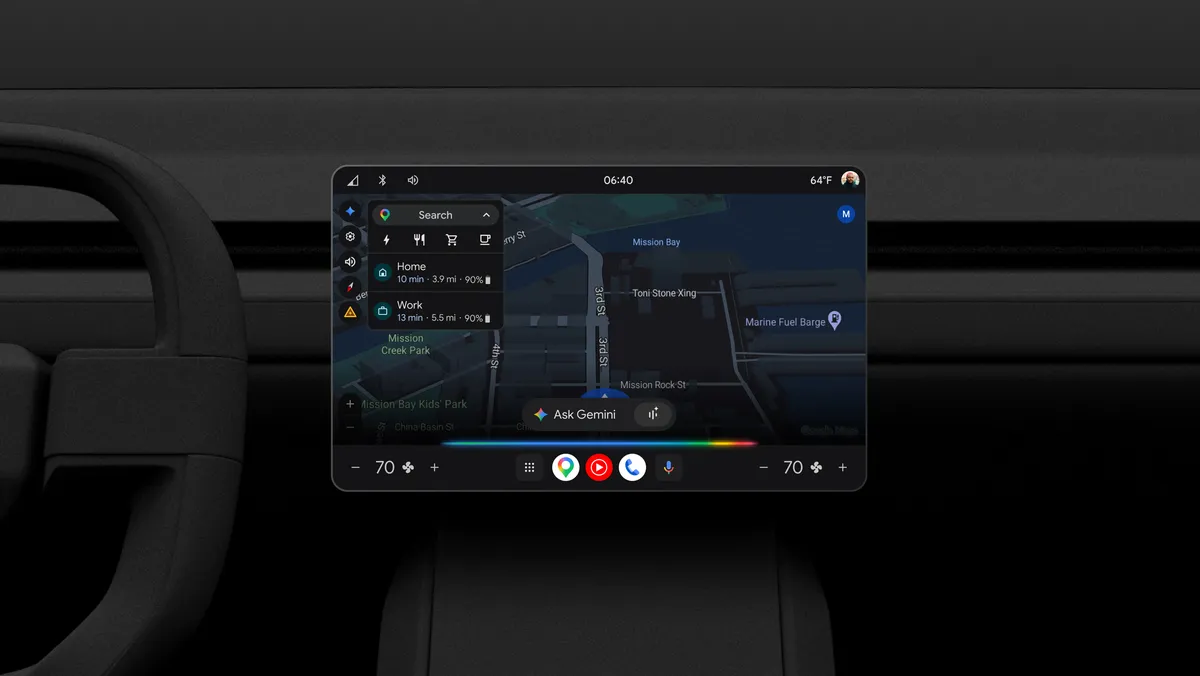
Google is taking its artificial intelligence capabilities on the road with the rollout of Gemini in cars, a move that could redefine how drivers interact with their vehicles. By integrating the advanced language model directly into the dashboard, drivers can now ask complex questions, control navigation, manage smart home devices, and even get real-time traffic updates without taking their hands off the wheel. This feature builds on Google Assistant but adds a conversational layer that understands context, remembers previous requests, and follows up naturally—making it feel less like a command system and more like a co-pilot. The rollout begins with select Android Automotive and Android Auto systems, with broader availability expected later this year. As AI becomes a staple in daily life, car manufacturers are racing to offer seamless, intelligent interfaces, and Google’s move positions it ahead of competitors like Apple and Amazon in the automotive space.
FCC Proposes Tougher Robocall Rules
The Federal Communications Commission is tightening the screws on robocallers with a new set of proposed rules aimed at protecting consumer privacy. The proposals would require callers to obtain explicit consent before using AI-generated voices or automated systems, and they would extend existing regulations to cover text messages and social media direct messages. The FCC argues that current loopholes allow scammers to exploit AI to mimic voices and trick victims. Consumer advocates have praised the move, though some privacy experts warn that enforcement will be difficult given the global nature of robocall operations. The public comment period is open, and the FCC hopes to finalize rules by mid-2025. If passed, these rules would represent the most significant update to telephone consumer protection laws in over a decade.
Fitbit App Becomes Google Health as AI Coaching Takes Center Stage
In a long-expected transition, the Fitbit app is being rebranded as Google Health, signaling the search giant’s deeper push into digital wellness. The new app retains Fitbit’s core tracking features—steps, sleep, heart rate—but adds AI-driven coaching that personalizes activity goals and nutrition advice. Users will now see daily “Health Scores” generated by machine learning models that analyze patterns and suggest improvements. The change also consolidates data from other Google services like YouTube and Search to provide a more holistic view of health. Existing Fitbit users will be migrated gradually, and all data remains under Google’s privacy policy. Critics worry about data consolidation, but Google insists that health information is kept separate from advertising data. This move positions Google Health to compete directly with Apple Health and Samsung Health, especially as wearable tech adoption grows.
Amazon Extends Price History Tool to One Year
Amazon has quietly extended its price history tool, now showing product price trends for up to one full year. Previously, users could only see a few months of data. The change provides unprecedented transparency for deal hunters, allowing them to spot real discounts versus marketing gimmicks. The tool, accessible via desktop and mobile, displays a graph of price fluctuations over time, along with the lowest and highest prices. Analysts believe Amazon is responding to competition from third-party price-tracking sites and increased scrutiny over fraudulent discounts. The feature currently covers millions of products, though availability varies by category. For consumers, this is a powerful tool to make informed purchasing decisions, especially during major sales events like Prime Day and Black Friday.
Samsung’s Answer to Meta’s Ray-Ban Smart Glasses Revealed in Leaked Images
Leaked images have surfaced showing Samsung’s upcoming smart glasses, designed to rival Meta’s Ray-Ban Stories and Ray-Ban Meta collaboration. The glasses feature chunky frames with built-in cameras, microphones, and a small LED indicator to signal recording. According to insiders, Samsung’s version will run on Google’s Android XR platform, offering seamless integration with Galaxy phones and smartwatches. The leaks suggest hands-free calls, navigation overlays, and AI-powered photo suggestions. Unlike Meta’s glasses, Samsung’s model is expected to include a small display for notifications, similar to Google Glass. The product is rumored to launch in early 2026, with a price point under $400. If successful, it could open a new front in the wearable tech war, combining fashion with functionality.
Apple Patches iPhone Bug Exploited by Police to Recover Deleted Chats
Apple has released an urgent security patch for iPhones that fixes a bug allowing law enforcement to recover deleted chats from messaging apps. The vulnerability affected the secure storage of encrypted messages, enabling forensic tools to reconstruct deleted conversations even when users thought they were gone forever. The bug was discovered by digital rights groups who reported it to Apple. While Apple insists it has no intention of providing backdoors, the incident raises fresh privacy questions about how much control users truly have over their data. The patch is available for iOS 18.2 and later, and users are strongly encouraged to update immediately. Privacy advocates are calling for stronger encryption defaults and better transparency in how Apple handles law enforcement requests.
Gemini’s ‘Continued Conversation’ Feature Makes Google’s AI More Practical for Smart Homes
Google is rolling out a “Continued Conversation” feature for Gemini, allowing users to ask follow-up questions without repeating the wake word—similar to Amazon’s Alexa Follow-Up mode. This makes interactions feel more natural, especially in smart home scenarios where multiple commands are common. For example, after asking about the weather, a user can say “what about tomorrow?” and Gemini understands the context. The feature works across Gemini-enabled smart speakers, displays, and soon, cars. Early reviews highlight reduced friction, but some users report occasional misunderstandings when conversations drift off-topic. Google plans to refine the feature using reinforcement learning from real-world interactions. This update is part of Google’s broader strategy to make Gemini a ubiquitous assistant across all devices.
Amazon Ending Support for Older Kindles Next Month
Amazon has announced that it will end support for several older Kindle models next month, meaning they will no longer receive security updates or access to the Kindle Store. Affected devices include the Kindle 4th Generation, Kindle Paperwhite (6th Generation), and the original Kindle Voyage. While existing books will remain readable, new purchases and downloads will be blocked. This move highlights the hidden cost of “forever” tech—devices that claim to be built to last but eventually become obsolete due to software abandonment. Amazon offers trade-in discounts on newer models, but critics argue that e-readers should have longer lifespans given their simple functionality. For owners of these older Kindles, the deadline to download their libraries is next month.
Casely Power Banks Recalled Again Following Mid-Flight Explosion
Casely is recalling its popular line of power banks for the second time in two years after a unit exploded mid-flight on a domestic airline. The incident caused minor injuries and forced an emergency landing. The recall covers several models with lithium-ion batteries that may overheat. Casely has offered full refunds or replacements, but the FAA is now investigating whether stricter regulations are needed for portable chargers on planes. This recall follows a similar one in 2023, raising questions about quality control. Consumers are advised to stop using the affected units immediately and check the serial numbers on Casely’s website. As battery technology advances, safety remains a top concern for both manufacturers and regulators.
From AI driving assistants to product recalls, the tech world continues to evolve at a breakneck pace. Staying informed about these changes helps consumers make smarter choices, protect their privacy, and get the most out of their devices.
Source: Techopedia News