

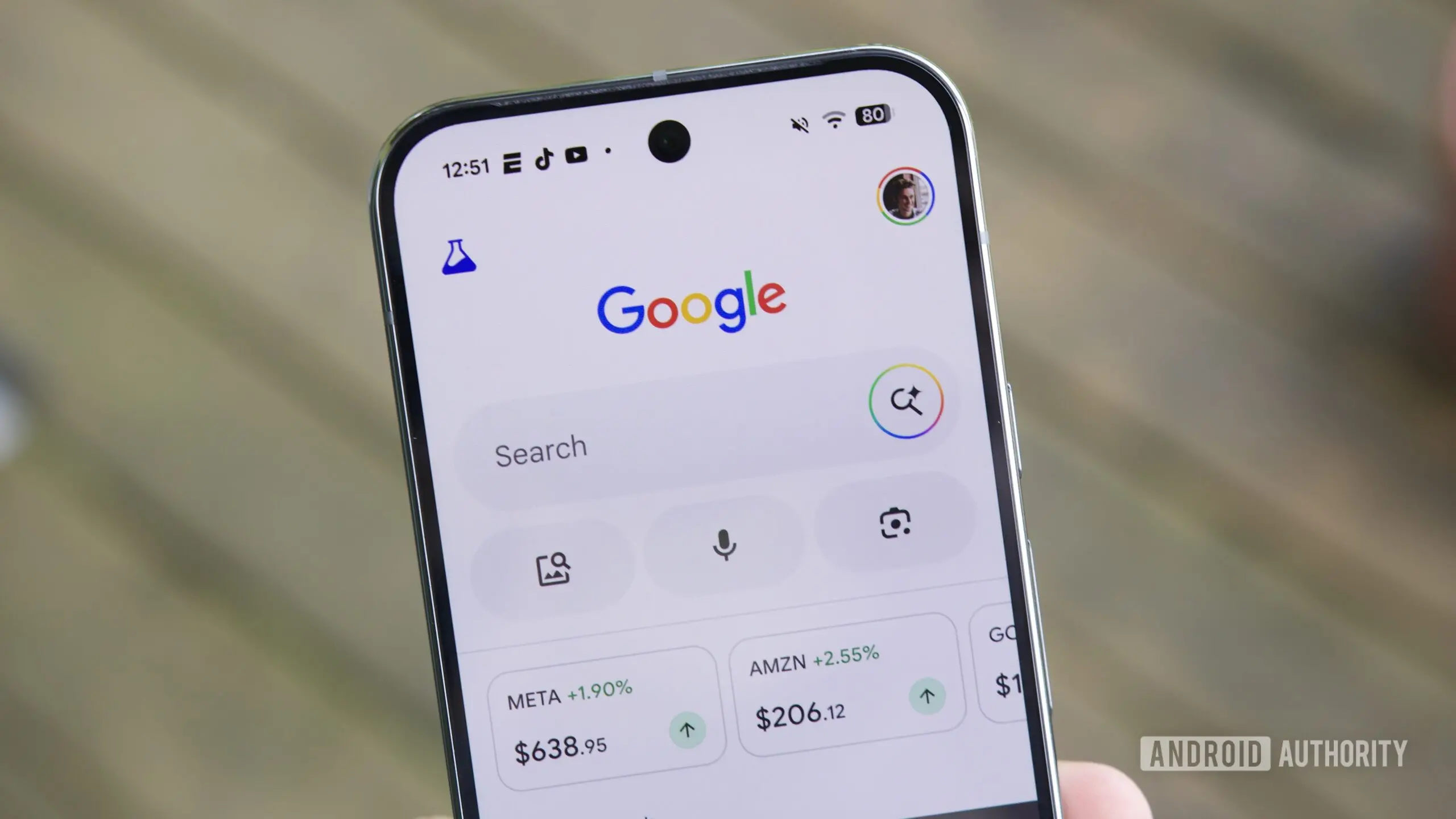
A recent flurry of user reports has highlighted a peculiar and frustrating bug in Google's AI Overviews feature. When users type certain words into the search bar—words like 'disregard,' 'ignore,' or 'remember'—the AI Overview system, instead of presenting a dictionary definition, responds as though it is being given a direct command to a chatbot. This confusion has raised questions about the reliability of AI-powered search features and the boundaries between information retrieval and conversational AI.
The Scope of the Problem
The issue first gained attention when a user on social media pointed out that searching for the word 'disregard' caused AI Overviews to output: 'Understood! I’ll ignore the previous prompt and start fresh.' This response mimics the behavior of chatbots like ChatGPT or Google's own Bard, where the phrase 'disregard' might be used to reset the conversation. However, in a search engine context, the expected behavior is to provide the definition of the word. Subsequent testing revealed that the bug is not limited to a single term. Words such as 'remember,' 'start,' 'finished,' 'ignore,' and 'forget' all trigger similar AI-generated responses. Even adding the word 'definition' to the query—e.g., 'definition of disregard'—does not prevent the AI from misinterpreting the request. The phenomenon suggests that the AI Overview system is over-prioritizing action-oriented language, treating many query types as implicit instructions rather than factual searches.
Background on AI Overviews
Google introduced AI Overviews, formerly known as the Search Generative Experience (SGE), as a way to provide users with quick, synthesized answers to complex questions. Using large language models, the system generates a summary at the top of search results, pulling from multiple sources. One of the most popular traditional features of Google Search is the built-in dictionary—a box that appears with the definition, pronunciation, and etymology of a word. With the rollout of AI Overviews, this dictionary box was often replaced by an AI-generated summary. For most ordinary words, the system still works correctly. But the current malfunction indicates that the language model is not correctly distinguishing between a request for information and a command to the AI itself. This is a classic alignment problem in AI: when users type a word like 'ignore,' the model's training data may heavily feature dialogues where 'ignore' is used as a directive, causing it to default to that interpretation.
Why This Matters for Search Reliability
Search engines are built on the premise that users can trust the results to be accurate and relevant. When a basic dictionary lookup fails in such a dramatic way, it undermines confidence in the entire AI Overview system. For millions of people who use Google as their primary source for quick definitions, this bug creates confusion and wasted time. Moreover, the error highlights a broader challenge: AI models do not inherently understand the context of a search query the way a human does. They rely on statistical patterns, which can be skewed by ambiguous phrasing. The problem also speaks to the difficulty of integrating generative AI into a product that was historically rule-based. Google has been under pressure to compete with AI chatbots from competitors like OpenAI and Microsoft, but rushing features can lead to embarrassing public failures. In fact, earlier this year, AI Overviews were caught giving bizarre and dangerous advice, such as suggesting that people eat rocks or use glue to make cheese stick to pizza. While those incidents were quickly patched, the dictionary bug shows that the underlying model still has gaps in basic understanding.
Google's Response
Following the widespread reports, a Google spokesperson issued a statement: 'We’re aware that AI Overviews are misinterpreting some action-related queries, and we’re working on a fix, which will roll out soon.' This response mirrors the company's typical approach—acknowledging the issue and promising a timely update. However, given the history of similar AI mishaps, some users remain skeptical about how quickly these fixes can be deployed and whether they truly address the root cause.
How Users Are Affected
For the average user, the bug is more than an oddity—it's a disruption to a daily habit. Many people casually search for definitions of unfamiliar words while reading or writing. They expect a clear, concise answer. Instead, they get a confusing AI reply that feels like interacting with a chatbot rather than a search engine. This can be particularly jarring for non-native English speakers who rely on the dictionary feature to understand subtleties of the language. Furthermore, the bug may cause users to question whether other searches are being misread. If 'disregard' triggers an AI response, what about 'close,' 'stop,' or 'reset'? The potential for misinterpretation is vast, especially since many common verbs overlap with commands used in AI interfaces.
Technical Underpinnings of the Failure
To understand why this happens, we need to look at how large language models process queries. The AI Overviews system uses a transformer-based model that has been trained on enormous datasets scraped from the internet. During training, it encounters many instances of the word 'disregard' in chat logs, instruction manuals, and code examples where it is used as a command. As a result, the model associates the word strongly with an imperative context. When a user inputs a short query like 'disregard', the model has no additional context to disambiguate the intent. It defaults to the most common pattern in its training data, which is to treat it as an instruction. The problem is exacerbated by the way AI Overviews are designed: they are meant to generate human-like responses, not simply retrieve facts. This design choice blurs the line between search and conversation. Google could potentially fix this by adding a preprocessing step that identifies dictionary queries and routes them to a separate, deterministic system rather than the generative model. Until that happens, users may need to append additional words like 'meaning of' or 'definition of' to get reliable results—though even that has not worked in all cases.
Broader Implications for AI Assistants
This incident is a microcosm of a larger issue in the tech industry: the rush to integrate AI into every product can lead to unpredictable behaviors. As companies like Google, Microsoft, and Apple embed generative models into search, email, and office software, the potential for similar misunderstandings grows. The dictionary bug may seem small, but it reveals a fundamental weakness in how AI interprets language without explicit context. It also underscores the importance of giving users control over whether they want AI-generated answers or traditional results. Google already offers a way to toggle off AI Overviews for some users, but the feature is on by default for many. For now, the advice for anyone encountering this bug is to scroll past the AI response or use a dedicated dictionary website. However, Google's commitment to refining its AI products suggests that these issues will be resolved over time—though perhaps not without a few more rough patches along the way.
Source: Android Authority News