

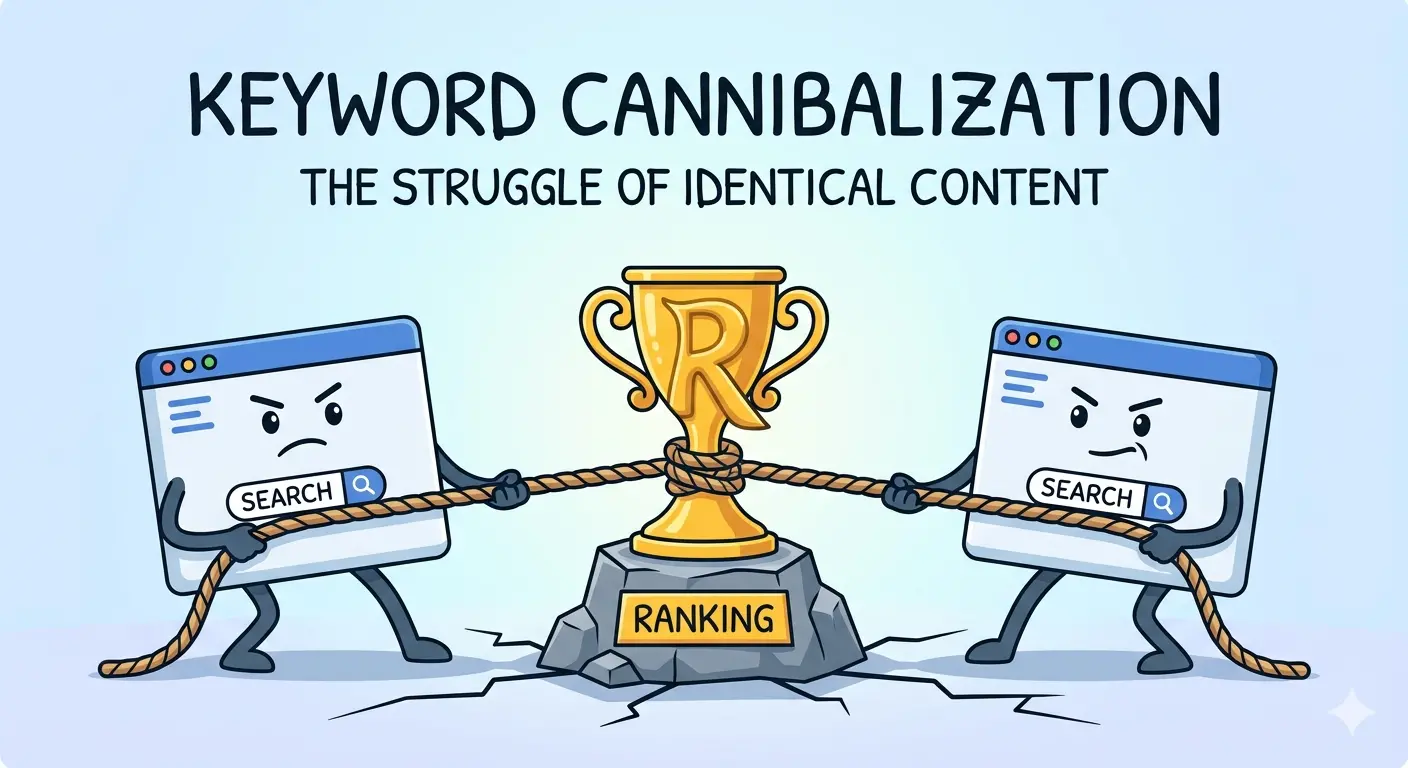
TL;DR: Keyword cannibalization happens when multiple pages on your site compete for the same search intent, confusing search engines and diluting your ranking power. You can fix it by merging overlapping content, using 301 redirects, or re-optimizing pages to target unique sub-topics. Addressing this ensures your Guest Posting Services and internal content don't fight each other for the top spot.
I’ve spent over a decade in the SEO trenches, and here is a hard truth: most site owners are their own worst enemies. You spend thousands on Guest Post Backlinks and high-quality content, only to find your rankings stuck on page two. Often, the culprit isn't a lack of authority—it's that you've built three different pages that all want to be the "definitive guide" for the same keyword.
When you offer Guest Posting Services, you need every URL to have a clear, distinct purpose. If your "Buy Guest Posts" page is competing with your "Guest Post Outreach" blog post, Google simply won't know which one to rank. Usually, it ends up ranking neither very well.
What Is Keyword Cannibalization?
Keyword Cannibalization: This occurs when two or more pages on a single website target the same or very similar keywords, causing them to compete against each other in search results.
Here is the thing—it isn't just about having the same word in the title. It is about intent. If you have a service page for High DA Guest Posting and a blog post titled "Why You Need High DA Guest Posting," and both are trying to rank for that exact phrase, you’re cannibalizing your own authority. Google sees two different answers from the same source and decides to split the "ranking juice" between them. Instead of one strong page sitting at position #2, you get two mediocre pages sitting at positions #14 and #18.
Why Keyword Cannibalization Matters
In the current era of generative search and AI-driven results, clarity is everything. Search engines are getting much better at understanding topical clusters. If your site structure is messy, an AI overview might pull a snippet from your outdated 2022 blog post instead of your high-converting 2026 service page.
I’ve seen this work against big brands specifically. They have a massive archive of content, and because they keep targeting White Hat Guest Posting across fifty different articles, their total traffic stays flat despite publishing more. In 2026, Google rewards "information gain." If Page A and Page B say the same thing, one of them is essentially "dead weight" that drags down your overall site health.
How to Fix Keyword Cannibalization — Step by Step
Fixing this isn't about deleting everything. It’s about being a bit of a digital architect. Here is the process I use when auditing a new client’s portfolio.
Audit Your Existing Content: Use a search console or a ranking tool to see which URLs are ranking for the same terms. Look for "Guest Posting for SEO" and see if three different URLs show up with low click-through rates.
Analyze Search Intent: Does the user want to buy or learn? If one page is a sales page for Niche Guest Posts and the other is an educational guide, you might be okay—as long as you differentiate the headers.
Choose a "Canonical" Winner: Decide which page is the most valuable. Usually, this is the one with the most High Authority Backlinks or the highest conversion rate.
Merge and Purge: Take the unique, valuable info from the "losing" page and move it to the "winner."
Implement 301 Redirects: Don't just delete the old page. Redirect the URL to your winner so you don't lose any existing Guest Post Link Building equity.
Update Internal Links: Change any internal links that were pointing to the old page so they now point to your new, consolidated powerhouse.
Expert tip: Most people think they need a new page for every long-tail variation. That’s a mistake. In my experience, one "mega-page" that covers five related sub-topics usually ranks better than five small pages that each cover one. Google loves depth, not just volume.
The Counterintuitive Truth: You Don't Always Want to Fix It
Let me be direct: sometimes "cannibalization" is actually a good thing. If you occupy positions #1 and #2 for "Manual Outreach Guest Posting," do not change a single thing!
What most people overlook is that owning multiple spots on page one is the ultimate SEO win. It’s called "SERP Crowding." If you have two different pages ranking in the top five, you are effectively pushing a competitor off the first page. Only fix cannibalization if your pages are struggling or fluctuating wildly in the rankings. If you're winning, stay put.
How to Use Guest Post Outreach Without Creating Conflict
When you start a campaign for Guest Post Backlinks, you have to be intentional about your anchor text. I've seen many marketers make the mistake of using the exact same anchor text for every single link, pointing to different pages.
If you are working with a Guest Post Agency, tell them exactly which URL is the priority for which keyword. For instance, point "Premium Guest Posting Sites" to your main service page, and use "How to find Dofollow Guest Posts" to point to a specific educational resource. This keeps your "link graph" clean and tells Google exactly which page is the authority on which specific topic.
Best Press Release Submission Platforms for SEO & Brand Visibility
Beyond standard articles, using press release distribution sites is a powerful way to signal authority to search engines. A well-timed release can clear up "brand" cannibalization by establishing your official homepage or service page as the primary news source for your company. Many PR submission sites offer the benefit of high-speed indexing, which is vital when you are trying to rank for trending topics.
When you work with a professional press release agency, they help you craft a narrative that naturally incorporates online PR marketing strategies. These platforms provide valuable backlinks from high-authority news outlets. The key is to ensure your press releases aren't just copies of your blog posts. They should offer "newsworthy" data or announcements. This variety in your link profile—mixing news distribution platforms with traditional guest posts—creates a natural, authoritative footprint that is very hard for competitors to beat.
People Most Asked about Keyword Cannibalization
Can I have two pages ranking for the same keyword?
Yes, and it’s actually a great result if they are both on the first page. It only becomes a "fixable" problem when those pages are stuck on page two or three because they are splitting the authority that would otherwise put one page at the top.
Is keyword cannibalization a penalty?
No, Google won't penalize your site manually for this. However, it acts as a "self-imposed" ceiling. You are essentially making it harder for your own content to succeed by spreading your resources too thin across multiple URLs.
How do I use the rel="canonical" tag to fix this?
If you have two pages that must both exist (perhaps for user experience reasons) but you only want one to rank, you can add a canonical tag to the "secondary" page pointing to the "main" one. This tells Google: "I know these are similar, please count the credit for this one toward the other URL."
Does internal linking cause cannibalization?
Actually, internal linking is often the cure. By linking from your smaller posts to your main Guest Posting Services page using the primary keyword as anchor text, you are signaling to Google that the service page is the "boss" of that topic.